
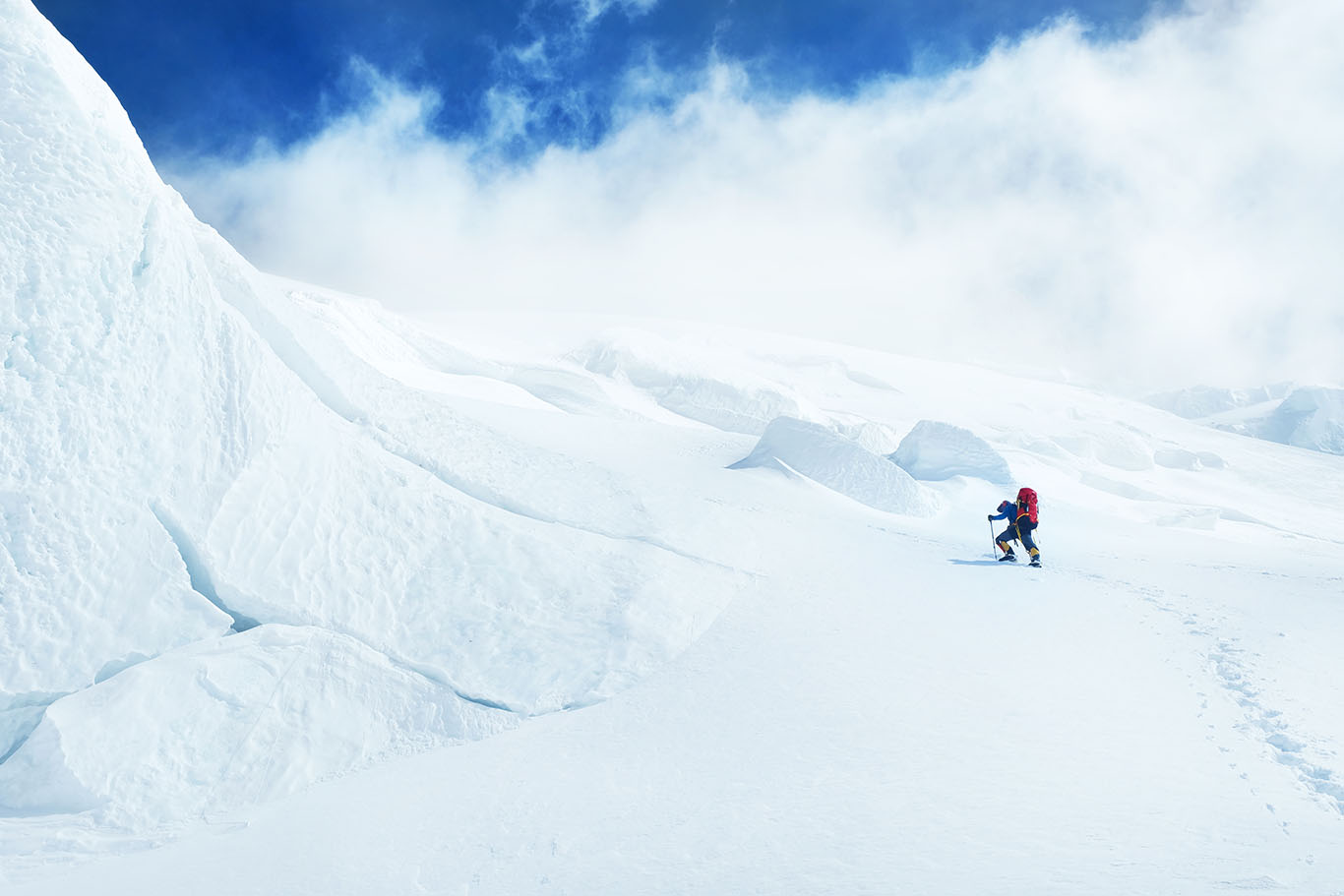
Your lungs burn with every breath. Your heart pounds against your ribs, trying to pump blood that has grown thick and sluggish. Each step requires a massive mental effort, and the cold is sharp enough to cut through your thickest layers. You are standing in the Death Zone, where the thin air is actively trying to end your life. This is the reality for anyone pushing toward the summit of the world’s highest peaks, and it is why climbers use oxygen when climbing at high altitudes.
When you climb above 8,000 meters, you enter the Death Zone. At this height, the atmosphere is so thin that the human body begins to break down. You can no longer sustain life indefinitely, regardless of how fit you are. Supplemental oxygen is not just a luxury for the weak; it is a critical tool that keeps mountaineers alive, functional, and able to make the complex decisions required to descend safely.
Understanding Hypoxia: The Core Challenge of Altitude
To understand why oxygen is necessary, you first need to understand what happens to the air as you climb higher. The science is less about the “purity” of the air and more about the crushing weight of the atmosphere above you.
Atmospheric Pressure and Partial Pressure of Oxygen
People often assume that oxygen levels in the air decrease as you gain elevation. In reality, the percentage of oxygen in the air stays constant at roughly 21% until you reach space. The real issue is barometric pressure.
At sea level, the weight of the entire atmosphere presses down on the air, compressing it and forcing it into your lungs. As you climb, the barometric pressure drops. The air molecules spread out. This drop in pressure lowers the “partial pressure” of oxygen. Even though oxygen is still present, there is not enough pressure to force it across your lung membranes and into your blood. At the summit of Mount Everest, the partial pressure of oxygen is about one-third of what it is at sea level.
The Body’s Response to Decreased Oxygen
Your body tries to fight this drop in oxygen. It forces you to breathe faster and deeper, known as hyperventilation. Your heart rate skyrockets, even while you are resting. You produce more red blood cells to carry what little oxygen remains.
Eventually, these systems fail. When you cannot get enough oxygen, your body suffers from hypoxia. This leads to Acute Mountain Sickness (AMS), which feels like a severe hangover. Left untreated, this progresses to High Altitude Pulmonary Edema (HAPE), where fluid fills the lungs, or High Altitude Cerebral Edema (HACE), where the brain swells. Without intervention, these conditions are fatal.
The Critical Threshold: Above 7,500 Meters
There is a line in the mountains that marks the point of no return for human biology. Around 7,500 meters, the body hits a wall. Acclimatization—the process of adjusting to lower oxygen—stops working.
Past this point, your body consumes its own muscle tissue for energy. You enter a state of slow physiological decline. Most climbers who attempt 8,000-meter peaks without bottled air move incredibly slowly because their bodies cannot recover. The math is stark: climbing without oxygen above 8,000 meters significantly increases the risk of death, frostbite, and permanent organ damage.
The Mechanics of Supplemental Oxygen Systems
Using supplemental oxygen sounds simple, but it requires a reliable system that can withstand extreme temperatures and physical abuse. Climbers rely on specialized equipment to deliver a consistent flow of gas to their lungs.
Components of a High-Altitude Oxygen System
A standard system consists of four main parts:
- Cylinders: These are lightweight aluminum or carbon-fiber bottles designed to hold compressed oxygen at high pressure.
- Regulator: This is the heart of the system. It reduces the high pressure inside the tank to a steady, breathable flow.
- Flow Meter: This allows the climber to adjust the flow rate, usually measured in liters per minute (LPM).
- Mask: A tight-fitting mask delivers the oxygen directly to the nose and mouth, preventing waste.
Most mountaineers use “open-circuit” systems. In this setup, the climber breathes a mix of bottled oxygen and the thin, ambient air. It is simple, reliable, and keeps the gear light enough to carry on a vertical face.
Calculating Duration and Consumption Rates
Strategy is the most important part of managing oxygen. A bottle does not last forever. If you run out, the sudden drop in oxygenation can cause immediate, violent reactions in the body.
Climbers calculate their summit window down to the minute. A standard flow rate is between 1 and 4 liters per minute. If you burn through your supply too quickly to keep up a faster pace, you will run out before you return to a lower camp. Pre-expedition training involves learning exactly how your body consumes oxygen at different exertion levels so you don’t overextend yourself.
The Weight and Logistics Trade-Off
Oxygen bottles are heavy. A full cylinder can weigh several kilograms, and a climber might need to carry multiple bottles for a summit push. To manage this weight, many expeditions rely on fixed lines and Sherpa support. Support teams stage oxygen bottles at higher camps in advance. This allows the climber to swap empty bottles for full ones, ensuring they have a fresh supply for the most dangerous parts of the climb.
Performance Enhancement and Safety Margins
The primary purpose of oxygen is safety, but it also fundamentally changes performance. It allows climbers to move with enough speed to clear the danger zone.
Restoring Cognitive and Physical Function
Oxygen is the fuel for your brain. At extreme altitude, hypoxia causes “brain fog.” You lose the ability to calculate, balance, or react to hazards. A simple mistake—like forgetting to clip into a rope or losing your footing—can end in a fall. Supplemental oxygen keeps your cognitive function sharp. It ensures you can make the smart, tactical decisions necessary to stay safe while moving over technical terrain.
Reducing Time Spent in the Death Zone
Speed is the best safety net in high-altitude climbing. The less time you spend exposed to the cold and the thin air, the lower your risk of frostbite and altitude sickness. Oxygen allows climbers to move faster and spend less time in the Death Zone. Records show that climbers using oxygen generally spend significantly less time above 8,000 meters than those without, reducing the total amount of strain on their hearts and lungs.
Mitigating Severe Altitude Illnesses
Oxygen is also a medical treatment. If a climber shows early signs of HAPE or HACE, supplemental oxygen is the first thing that goes on. It can temporarily reverse symptoms, giving the climber the time and strength needed to descend. Without that portable, life-saving air, many climbers would be unable to get themselves down the mountain when trouble starts.
The Debate: Purity vs. Pragmatism in High-Altitude Climbing
While oxygen is a life-saving tool, it remains a point of intense debate in the mountaineering world. The argument pits the desire for a “pure” athletic achievement against the pragmatic need for survival.
The “Pure Ascent” Argument
For some elite climbers, using oxygen feels like cheating. The philosophy of a “pure ascent” dictates that the challenge lies in what your own body can do without artificial assistance. When Reinhold Messner and Peter Habeler first summited Everest without oxygen in 1978, they proved that it was biologically possible. Purists argue that bringing bottled air diminishes the accomplishment, as it masks the true physiological toll of the mountain.
The Evolution of High-Altitude Mountaineering
On the other side of the debate is the commercial reality. In the mid-20th century, high-altitude climbing was the domain of a few elite experts. Today, it is an industry. Oxygen has normalized the experience, allowing thousands of non-professional climbers to attempt peaks that were once considered impossible for anyone but the best. The massive spike in successful summits since the 1960s is directly linked to the widespread, reliable use of bottled oxygen.
Safety, Commercialization, and Crowding
Critics also argue that oxygen creates a false sense of security. Because oxygen masks the symptoms of altitude sickness, less-experienced climbers may push higher than they should. This creates congestion on the fixed routes. When a hundred people are all trying to pass through a narrow ridge, the line stops moving. This “traffic jam” keeps people in the Death Zone for hours longer than planned, which creates new, unnecessary risks for everyone on the mountain.
Conclusion: Balancing Risk, Reward, and Respiration
The use of supplemental oxygen changes the game of high-altitude mountaineering. It transforms a desperate fight for survival into a manageable strategic mission. While the “pure ascent” is a romantic ideal for the elite, for the average expedition, oxygen is an essential safety component.
It allows for better decision-making, faster movement, and a crucial safety margin against the inevitable failures of the human body at altitude. Ultimately, the goal of any expedition is not just to reach the summit, but to return home. Supplemental oxygen provides the clearest, safest path to achieving both.